
What Cave Exploration Taught Me About Patience
Some Discoveries Take Years
Almost Two Years to Find a Connection
Some Sections Take Years to Finish
Florida Has Taught Me the Same Lesson
Exploration Isn’t a Race
Failed Dives Aren’t Always Failures
Sometimes You Need to Walk Away
The Cave Sets the Schedule
Patience Doesn’t Mean Losing the Drive
Why the Drive Doesn’t End
What Patience Has Changed for Me
Final Thoughts
Free PDF Download
Download The 10 Most Common Sidemount Configuration Mistakes and learn how to improve trim, streamline your equipment, and avoid the setup errors that frustrate many sidemount divers.
Get the Free Guide →
✓ Includes Configuration Checklist
✓ Includes Self-Assessment Worksheet
✓ Instant Download
Some Discoveries Take Years
Exploration has a way of changing your relationship with time. When you first become interested in a cave system, it’s easy to imagine exploration as a series of discoveries. Find the passage. Follow it. Make the connection. Map the cave. Move on to the next objective.
Real exploration rarely works that way. Some discoveries happen quickly. Others take years.
Sometimes you know a connection exists but can’t find it.
Sometimes you reach the end of a passage and have no idea where it goes.
Sometimes you have to return again and again before the cave finally gives you the answer.
I’ve learned that patience isn’t something separate from exploration.
It’s one of the requirements.
Almost Two Years to Find a Connection
One of the best examples for me was the connection between Cueva Quebrada and Dos Coronas. I knew there was a possibility of a connection. Finding it was another matter. It took almost two years.
Two years of looking.
Two years of exploring.
Two years of trying different approaches and following clues through the cave.
The connection didn’t suddenly appear because I wanted it to. The cave didn’t care how long I’d been looking. It simply existed, or didn’t, and my job was to keep working the problem.
When the connection was finally found, the discovery was significant. But what stands out to me now isn’t just the moment of finding it. It’s everything that came before it.
All the dives where the answer wasn’t there.
All the time spent examining possibilities.
All the times the exploration ended without producing the result I wanted.
That’s where patience becomes part of the process.
Some Sections Take Years to Finish
The same lesson came from exploring the Escondido section.
It wasn’t a matter of making one dive and checking the exploration off a list.
It took years.
Passage by passage.
Dive by dive.
The work accumulated slowly. There were sections that needed to be revisited. Questions that needed answers. Areas that required more exploration before the bigger picture became clear.
Exploration doesn’t always provide immediate rewards. Sometimes you’re simply adding another piece to a puzzle that may not make sense until much later. And that’s okay.
Florida Has Taught Me the Same Lesson
I’ve been working on exploration projects in Florida for several years.
There are still questions.
Still places to investigate.
Still passages that haven’t given up all their secrets.
That’s one of the things I love about exploration. The work doesn’t really end. You may finish one project, but the discovery creates another question.
A passage leads somewhere unexpected.
A map reveals a possibility.
A spring raises another question.
A connection that seemed impossible suddenly becomes worth investigating.
The drive never ends.
Exploration Isn’t a Race
There is no prize for finishing first. There is no deadline imposed by the cave. And there is rarely a straight line between the question and the answer.
Trying to force exploration because you want a result can actually make you less effective. You start seeing what you want to see. You become attached to a particular theory. You overlook evidence that doesn’t fit.
Patience gives you the ability to step back. Look again. Change your approach. And accept that the cave may not answer your question today.
Failed Dives Aren’t Always Failures
Some exploration dives don’t produce a discovery. That doesn’t necessarily make them failures. You may eliminate one possibility. Learn something about the cave. Find a passage that doesn’t go where you expected. Discover that an idea doesn’t work. Or simply become more familiar with the system.
All of that information matters. Exploration is cumulative. A dive that doesn’t produce the discovery you’re looking for may provide the information needed for the dive that eventually does.
Sometimes You Need to Walk Away
Patience doesn’t mean endlessly pursuing the same idea. Sometimes the correct decision is to stop. Leave the problem alone and come back later. A fresh perspective can reveal something that wasn’t obvious before. This is particularly true when you’ve spent a long time looking for something specific. The longer you become attached to a particular answer, the harder it can be to recognize that the answer may be somewhere else.
Walking away isn’t abandoning the exploration. Sometimes it’s part of the exploration.
The Cave Sets the Schedule
This may be the hardest lesson to accept. You can’t make the cave reveal something simply because you’re ready for it.
Water conditions change.
Access changes.
Logistics change.
Your own experience changes.
New technology becomes available.
Someone notices something that wasn’t noticed before.
An idea that seemed unreasonable five years ago may become the key to solving a problem today.
The cave hasn’t necessarily changed. Your understanding of it has.
Patience Doesn’t Mean Losing the Drive
There is an important distinction between patience and complacency. Being patient doesn’t mean sitting around waiting for something to happen. Exploration still requires effort.
You continue researching.
You continue diving.
You continue mapping.
You continue looking at maps, photographs, geology, flow, and every other clue available to you.
You just accept that the answer may take longer than you want. That’s a very different mindset.
Why the Drive Doesn’t End
One discovery rarely satisfies an explorer permanently. If anything, it creates more questions.
The connection between two caves raises questions about what lies beyond both. Completing one section reveals another possibility. A map that once represented an unknown area becomes a starting point for the next investigation. That’s what keeps the process moving.
In my early years of exploring the caves beneath the jungle of Cozumel, I had times when I thought my Cozumel caves exploration days were coming to an end. Then I made a new discovery.
I stopped thinking I would be finished exploring the caves of Cozumel years ago. I now realize I will never finish. My work will continue after my exploration days are long behind me.
This is because the goal isn’t simply to finish. It’s to understand. And there is always more to understand.
What Patience Has Changed for Me
Early in my exploration, I wanted answers. Now I’m more comfortable with questions. That’s probably one of the biggest changes exploration has made in me.
I don’t need to know where a passage goes before I enter it.
I don’t need to know that a connection exists before looking for it.
And I don’t need every dive to produce something spectacular.
Sometimes the most valuable result is simply knowing a little more than I did before. Over enough dives, those small pieces begin to form a much larger picture.
Final Thoughts
It took almost two years to find the connection between Cueva Quebrada and Dos Coronas.
It took years to complete the exploration of the Escondido section.
I’ve spent several years working on exploration projects in Florida, and there are still questions I haven’t answered.
There will probably always be more. And that’s exactly what keeps me going.
Exploration has taught me that patience isn’t waiting for something to happen. It’s continuing to work when you don’t know when the answer will come.
Some discoveries take a dive. Some take dozens. Some take years. And occasionally, the answer is waiting somewhere you weren’t even looking.
The important thing is to keep looking. Because the drive to explore doesn’t end when you make a discovery. It starts the next question.
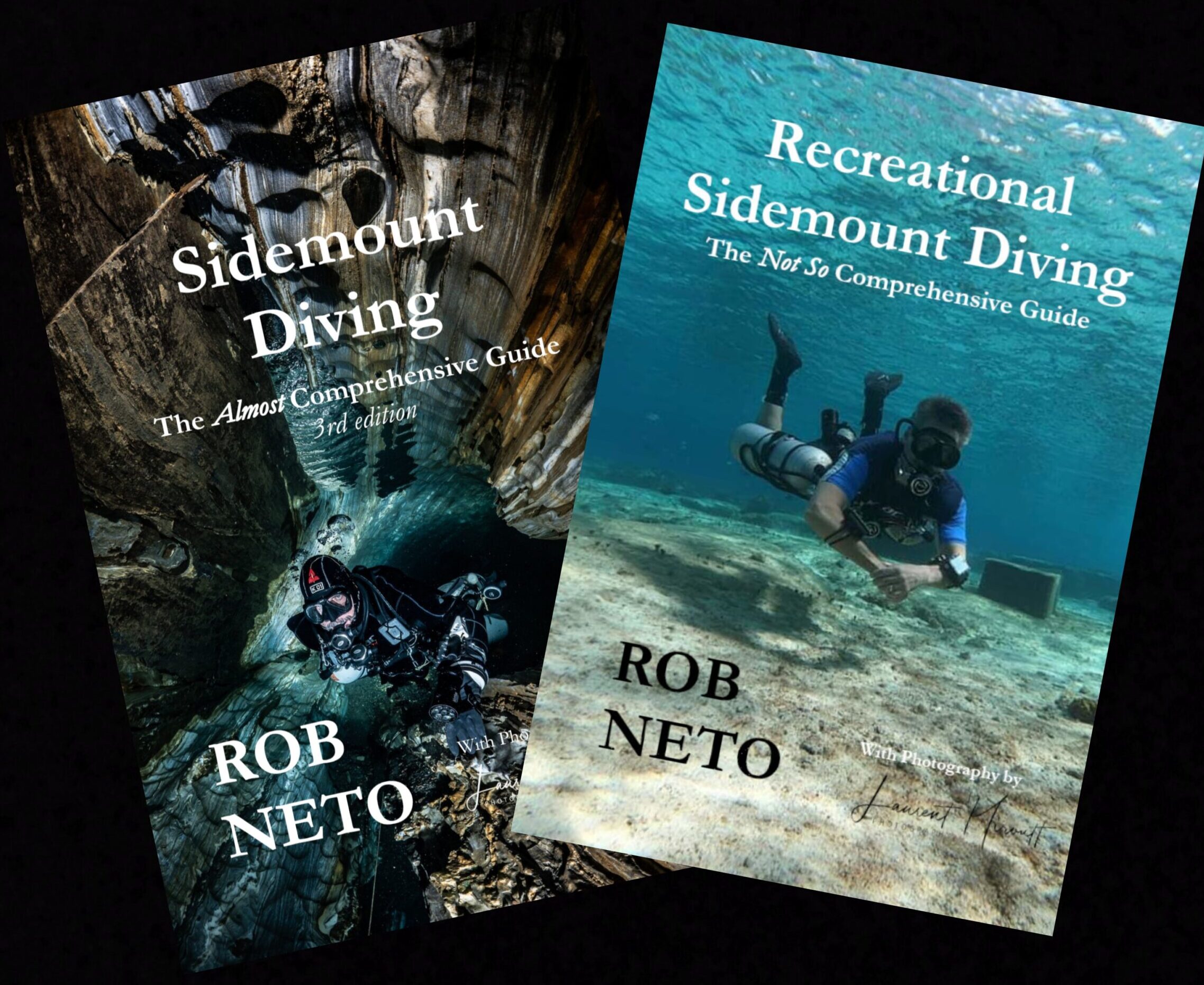
If you found this article helpful, you can receive $10 off the book Sidemount Diving when purchasing directly from the website.
Use code PATIENCE10 during checkout.
Free PDF Download
Enjoyed this article?
Download The 10 Most Common Sidemount Configuration Mistakes and get the configuration checklist and self-assessment worksheet.
Get the Free Guide →
✓ Includes Configuration Checklist
✓ Includes Self-Assessment Worksheet
✓ Instant Download