
How to Choose a Sidemount Instructor
When sidemount diving first started to become popular, there were very few options when it came to taking a sidemount diving course. Only one training agency offered a course, and instructors were few and far in between. Most of us were left to teaching ourselves through trial and error.
Today, every training agency offers a sidemount diving course. There are many sidemount diving instructors around the world. One of the most important decisions you can make is choosing the right instructor that will teach you the complete sidemount diving configuration that will work for your diving. So, how do you decide who the best sidemount diving instructor is for you?
What Kind of Diving Do You Want To Do?
Keep an Open Mind
Choose Carefully
What Kind of Diving Do You Want To Do?
This is the first question you should ask yourself. This is important because you want to find an instructor that does similar dives. If you have aspirations to become a cave diver, or are already a cave diver, you want to find a sidemount diving instructor that is also a cave diver. There are certain modifications and certain skills that we do that are specific to cave diving. If you take a sidemount diving course from an open water diving instructor, you may not get this information.
Keep an Open Mind
There’s a saying, “Get 10 sidemount divers together at a dive site and you’ll see 11 different ways to rig up your gear.” Find a sidemount diving instructor that isn’t going to tell you there is only one way to do things. Just because something works for one diver doesn’t mean it will work for another. You need to choose what works for you and your type of diving.
One of the things I taught in my sidemount courses was all of the possible ways to rig gear and why. I even taught the methods that didn’t work for me. Just because I’m partial to one method doesn’t mean that the other methods aren’t good ones. Following is an example.
I’ve pointed my SPGs in every direction possible. There are advantages and disadvantages to each of them. One of the key factors in which way you point your SPGs is your valve orientation. I’ve tried a few different valve orientations, too. After more than 20 years, I finally have things set up in a way that work for me…for now. In six months it may be different. This is what makes choosing a sidemount instructor that has experience in sidemount so important.
Choose Carefully
Over the years, there has been a surge in the number of sidemount instructors. Many of these instructors became sidemount divers and sidemount instructors over the same weekend. They have very little experience diving sidemount and may not even dive sidemount outside of classes. Even fewer dive sidemount in caves, the original environment sidemount was developed for.
Sidemount diving is more than just strapping cylinders to your sides and getting in the water to complete drills. A big part of the course should be setting up the gear before ever getting in the water and then tweaking it between dives to work for you. An instructor who has very little experience diving sidemount isn’t going to be able to help you do this. If that’s all you want the course for, just buy a book and read it. You’ll probably get more out of that. However, if you want to learn how to set up your gear so it works for you, and you want to save yourself several dozen dives in trials, find an instructor who has experience and dives sidemount to it’s fullest capabilities. Don’t only ask the instructor, but talk to other divers about the instructor. Then, when you begin the course, have fun, because that’s what it’s all about.
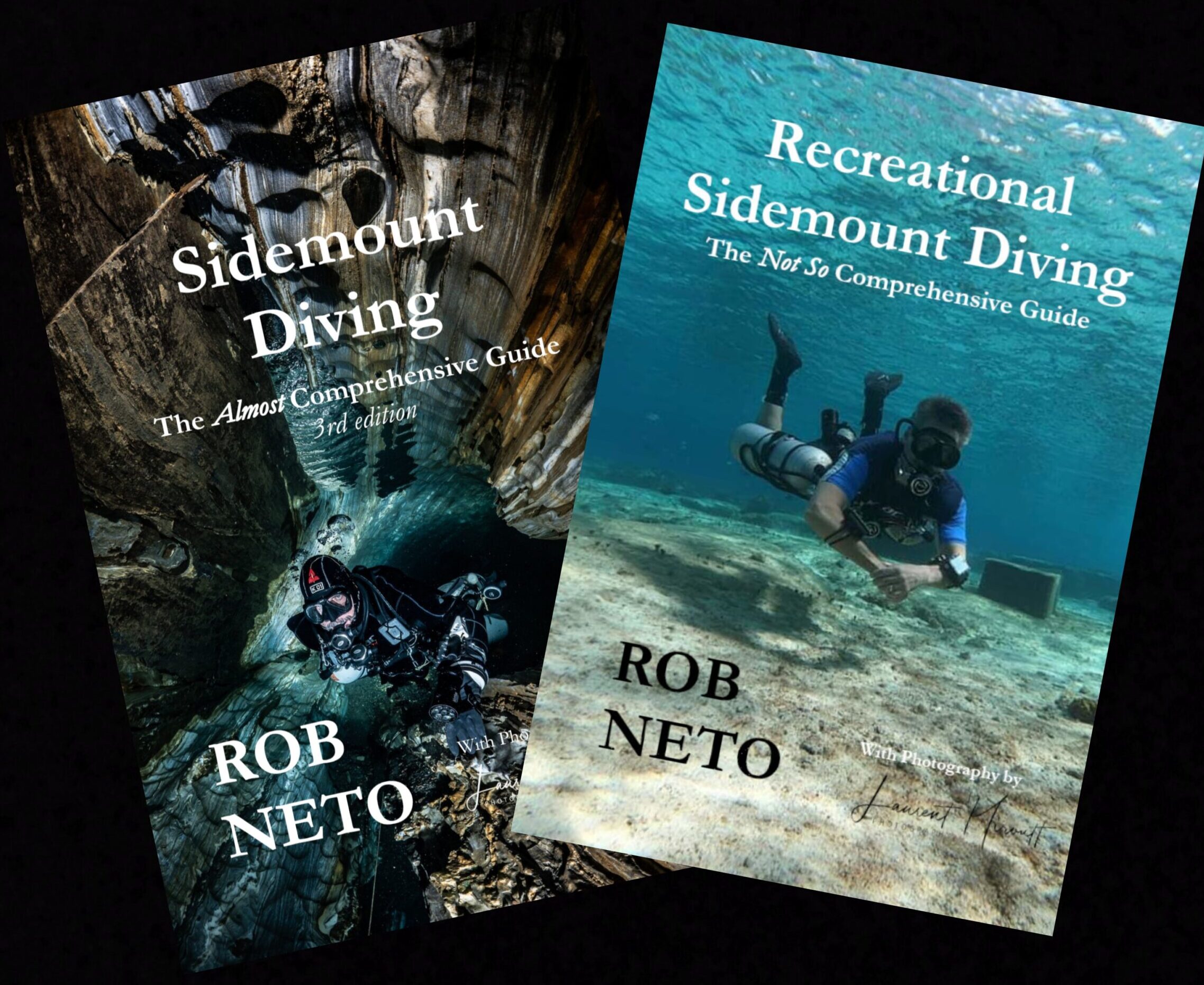
Enjoy a reader discount of $10 off the book Sidemount Diving or $5 off the book Recreational Sidemount Diving when purchasing directly from the website.
Use code INSTRUCTOR10 for the Sidemount Diving Guide and MONKEY5 for the Recreational Sidemount Diving Guide during checkout.
Related Articles
Sidemount vs Backmount for Cave Diving
For a complete overview of how these elements work together, see The Complete Guide to Sidemount Diving Configuration.